You might not think that a key to living a healthy life starts in your car, but it’s true. Your cabin air filter is the first line of defense for keeping the air you breathe on the go clean and healthy. Not only does it help to keep you healthy, but it is also crucial for keeping your vehicle running at its best. Keep reading to learn how a simple filter change can protect your health, improve air quality, and extend your vehicle’s life.
How a Cabin Air Filter Protects Your Health
Cabin air filters are essential to keeping you and your passengers healthy on the road. Your cabin air filter acts as a barrier between you and the pollutants outside of your vehicle, such as smog, exhaust smoke, pollen, dust, odors, and other allergens. Every time your HVAC system turns on, it pulls in outdoor air that can contain these contaminants, but when you have a clean cabin air filter, it traps them before they enter your indoor air. This keeps the air you breathe inside your vehicle safe and clean. This is particularly important for those who suffer from allergies, asthma, or other respiratory sensitivities, as breathing in these airborne pollutants can trigger symptoms and cause discomfort. Whether you have allergies or not, though, reducing your exposure to these contaminants is essential for your health.
How a Cabin Air Filter Protects Your Vehicle
The cabin air filter is a vital component for vehicle health. It helps to keep your vehicle’s HVAC (Heating, Ventilation, and Air Conditioning) system working correctly. The cabin air filter helps to keep air flowing smoothly through your HVAC system, so your air conditioner or heater can cool or heat the cabin quickly and efficiently. A cabin air filter helps your system avoid working overtime to reach your desired temperature and prevents unnecessary wear and tear on your HVAC components. When your cabin air filter is clean, your car will run at its best.

How to Change a Cabin Air Filter
Over time, your cabin air filter can become dirty and clogged. A dirty cabin air filter restricts airflow, making it harder for your HVAC system to function properly. Regularly replacing the cabin air filter, within the recommended cabin air filter change interval,r will help to keep the air in your car clean and your HVAC working efficiently. The good news? Changing the cabin air filter is an easy DIY task you can do in under 10 minutes! Here’s how to change a cabin air filter:
Step 1: Locate the filter
Use your vehicle’s owner’s manual to find the location of your cabin air filter. Typically, it is found behind the glove box, under the dashboard, or under the hood. If the filter is located behind your glove box, there should be side tabs that you can press to release the glove box. There may also be a cover you need to remove.
Step 2: Remove the old filter
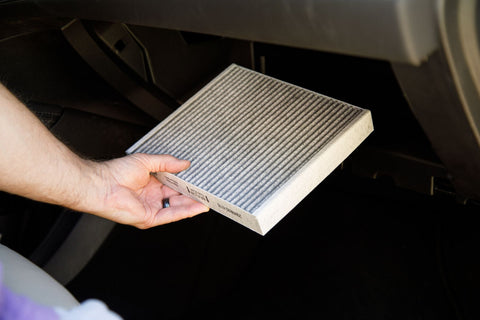
Once you have located the cabin air filter, slide out the old one and throw it away; be careful, as it may be filled with dust and debris. Be sure to pay attention to how the filter was installed so you can place the new one correctly. If you install the filter backwards, it can restrict airflow.
Step 3: Install the new filter
Insert the new filter into the housing, ensuring it’s installed correctly and in the same direction as the old one. Most filters have an arrow indicating the airflow direction; make sure you install the filter with this in mind.
Step 4: Reassemble and test
Reattach anything you removed, ensuring everything is aligned correctly and fastened. Turn your vehicle’s HVAC system on to test that everything is working correctly and that the air is blowing freely.
Regularly replacing your cabin air filter, typically every 12,000 to 15,000 miles, helps keep the air you breathe in your car fresh and clean. It also helps to keep your vehicle running at peak performance. This simple DIY task is the key to staying healthy wherever life takes you. Are you ready to replace your filter, but not sure what you need? You can use our simple tool to find the PUREFLOW® cabin air filter replacement for your car.