Your car’s cabin air filter is one of the most important and underrated components of your vehicle’s HVAC system. It not only affects the system’s performance, it also affects the health of the driver and the car’s occupants.
The cabin air filter is responsible for keeping the air inside your car clean, pollen-free, and fresh. But just like any other filter, the cabin filter can get clogged over time with dirt, dust, and other contaminants. As a result, one may start to notice performance changes in the HVAC system or smell an unpleasant odor inside the car.
A blocked or dirty cabin filter can give rise to multiple problems but before we discuss those further, let’s understand the role of a car cabin air filter.
Importance of a Cabin Air Filter

The cabin air filter performs a number of roles that ensure your car’s cabin is dust-free, and that the HVAC system performs at its optimum level. So, what are the roles of your car’s cabin air filter?
- To filter the air from dust, dander, and other contaminants so that the occupants breathe clean air.
- It ensures smooth and adequate airflow through the HVAC system, especially when defrosting or defogging.
- To eliminate odor from the HVAC system and to enhance the feel and mood of the driver and the occupants.
Without the existence of a car cabin air filter, life on the road could become quite difficult. Polluted air can cause complications in your vehicle’s HVAC system, which could result in it being damaged or having to be replaced. A cabin filter also helps to protect passengers from health issues caused by air pollution. The ability to defrost and defog windows becomes more challenging when the air is not being cleaned by a cabin filter.
If replacing your car’s cabin air filter is long overdue, you should look for the signs mentioned below.
Signs of a Dirty Car Cabin Air Filter

A cabin air filter is a key part of your vehicle’s HVAC system. It plays a vital role in the system’s ability to operate normally. The following signs are indications that your cabin filter is dirty and needs to be changed.
- A dirty or clogged cabin filter will cause a decrease in the flow of air coming from the vents inside your car. You may also notice the blower motor malfunction or not perform efficiently when the cabin filter is clogged.
In addition to reduced airflow, a clogged cabin filter can make your vehicle’s HVAC system work harder, leading to increased fuel consumption. When airflow is restricted, the system must use more energy to maintain the desired temperature, which can lower your car’s fuel efficiency over time.
- The second sign that you may notice is the presence of an unpleasant smell in the cabin, especially when using the fan or the AC. This is typical since a dirty cabin filter will be unable to filter unpleasant odor, causing it to pass into the cabin. This happens regardless of whether one is using a scented cabin air filter.
- Lastly, one may notice dust on areas like the dashboard and seats that would otherwise remain clean. Again, this happens when the cabin filter has reached its maximum capacity in filtering air.
While a dirty cabin filter could seem difficult to deal with, the solution is simple and easy. Make sure you keep a record of when your car’s cabin filter has been inspected or changed. Recommended cabin air filter replacement intervals are usually noted in your car owner’s manual. If your car owner’s manual isn’t available, you will need to consider several factors like the air pollution level in your area and the quality of the cabin filter being used.
To ensure you breathe clean air inside your vehicle, we recommend you check the condition of the cabin air filter every six months or twelve thousand miles. This will give you an idea of how much longer your vehicle’s cabin filter will last.
Commonly Asked Questions
-
Can a dirty cabin air filter affect my car’s air conditioning?
Yes, a dirty cabin air filter can reduce the efficiency of your car’s air conditioning system by restricting airflow, causing it to work harder and reducing its performance. You can learn more about related AC issues in our 5 Reasons Your Car AC Isn’t Blowing Cold Air blog.
-
How do I change a dirty cabin air filter myself?
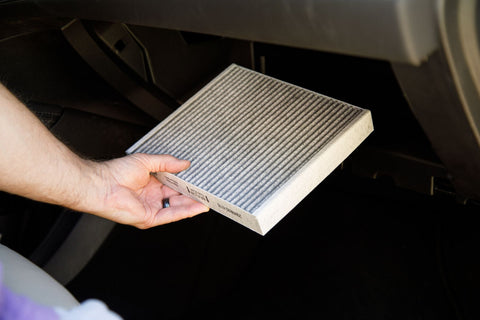
To replace a dirty cabin air filter, locate it (typically behind the glove compartment), remove the old filter, and install a new one. Check your car’s manual for exact instructions on how to access it.
Before installing, you can confirm the correct filter for your vehicle by searching your make and model on the lookup car page. -
Can a dirty cabin air filter cause bad odors in the car?
Yes, a dirty cabin air filter can cause bad smells in your car. When it’s clogged, it can’t effectively trap moisture and bacteria, which leads to musty odors circulating inside the cabin. -
Can a dirty cabin air filter reduce fuel efficiency?
Yes, a dirty cabin air filter can reduce fuel efficiency by forcing the HVAC system to work harder, which can increase fuel consumption over time. -
How to clean a dirty cabin air filter at home?
You can clean a dirty cabin air filter by vacuuming it gently to remove debris. If it’s washable, you can rinse it with water and let it dry completely. However, replacement is often more effective once a filter reaches the end of its lifespan, as explained in our guide on when to replace a cabin air filter.