If you’re getting ready to book an appointment at your local mechanic to have them change your cabin air filter, you should read this first! Trying DIY maintenance tasks can feel intimidating when you’re not a car expert, but have no fear; when it comes to changing your cabin air filter, this is something that anyone can do! Keep reading as we walk you through the whole process of how to change your cabin air filter.
Cabin Air Filter Basics

The cabin air filter helps to remove harmful contaminants, such as dust, pollen, debris, exhaust fumes, smoke, and more, from entering your car's cabin when the climate control system is running. Replacing the cabin air filter regularly, about every 12,000 to 15,000 miles, ensures you breathe in high-quality air, maintain a fresh new car scent, and keep your climate control system running efficiently. If you are experiencing reduced airflow from vents, musty or unpleasant odors inside the cabin, and increased dust or debris accumulation, it may be time to replace your cabin air filter.
Types of Cabin Air Filters
There are different types of cabin air filters, including:
- Particulate Filters: These filters are the most basic type of cabin air filter and are easily identified by the white media used to make them. They’re designed to trap tiny particles from getting into your vehicle. It can handle most pollen, mold, and dust particles. These filters will not neutralize odors.
- Combination Filters: These filters are more advanced, usually gray, and noticeably heavier than the white particulate media filter. They get their gray appearance from a layer of media infused with activated charcoal. This layer helps eliminate bad odors from the climate control system before they enter the cabin.
- HEPA (High-Efficiency Particulate Air) Combination Filters: HEPA cabin air filters by PUREFLOW® are designed with a 4-stage filtration process that includes a HEPA layer that is 99.97% efficient. These types of filters are especially helpful in preventing allergic reactions to outside contaminants such as dust, pollen, and pet dander, ensuring cleaner air and better health.
You can find the correct filter for your vehicle using the PUREFLOW® filter look-up tool.
What You Will Need
Installing a cabin air filter replacement is easy on most vehicles, and you likely won’t need much to get the job done. Some things you might need or want include:
- Replacement cabin air filter
- Vehicle owners manual
- Screwdriver
- Gloves
How to Change Your Cabin Air Filter
The first step is to check your vehicle’s owner's manual to determine the location and type of cabin air filter you will need. The cabin filter is typically located behind the glove compartment or under the dashboard. If your filter is behind the glove box, you’ll open and empty the contents and look for side tabs or stoppers. Press these inward to release the glove box so it will drop down further. There may be a cover you need to remove, and when you do, be sure to note the old filter's position when you remove it so you know what way to put the new one in.
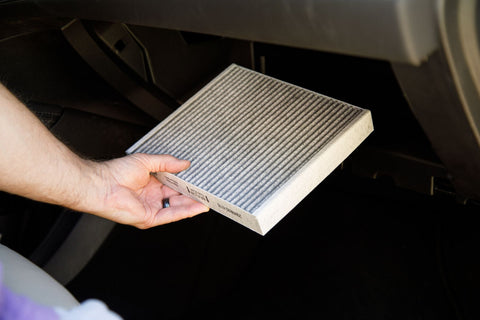
Carefully remove the old cabin filter, which may be filled with debris and dust, and throw it away. Make sure to verify the direction of the flow of air. If the filter is installed backward, it will restrict airflow drastically and cause the filter to become blocked faster than usual. To check this, after removing the old filter, turn on the fan, set the dial to max, and hold a piece of paper inside the cabin filter housing. Watch which side the paper moves to, and when you install the new filter, make sure the arrows point in the direction of where the paper moved.
Slide the new filter into the compartment, ensuring the arrows point in the correct direction and that the filter fits snugly and properly. Put the cover and glove box back in the correct position. Once that’s done, you can test the airflow by turning on your vehicle's climate control system to ensure that air flows smoothly through the new filter.
That’s it! That’s how simple it is to change your cabin air filter yourself. This simple DIY task can help improve your cabin’s air quality and keep your climate control system running smoothly. With a few tools, some simple instructions, and an extra 15 minutes, you can replace your air filter all by yourself and get back on the road.
Commonly Asked Questions
Q1. Is changing a cabin air filter a difficult DIY task?
Not at all! Replacing a cabin air filter is one of the easiest DIY vehicle maintenance tasks. On most vehicles, the cabin air filter is located behind the glove box or beneath the dashboard and can be replaced in about 15 minutes with little to no tools required. Refer to your vehicle owner's manual for model-specific instructions.
To make the process even easier:
- Watch our vehicle-specific installation videos to see exactly how to replace the cabin air filter on your make and model.
- Read our step-by-step guide: How to Change a Cabin Air Filter for helpful tips and best practices before you begin.
Q2. What are the benefits of regularly changing your cabin air filter?
Regularly replacing your cabin air filter helps keep the air inside your vehicle cleaner, improves HVAC performance, and protects your climate control system from unnecessary strain. Here is what a fresh filter does for you:
- Cleaner cabin air: The cabin air filter traps dust, pollen, mold spores, exhaust fumes, and other airborne contaminants before they enter the cabin through the HVAC system, helping improve the quality of the air you breathe inside your vehicle.
- Better AC and heating performance: A clean filter allows proper airflow through the HVAC system, helping maintain efficient heating and cooling. A clogged filter can restrict airflow, making your climate control system work harder and reducing overall performance.
- Reduced allergen exposure: By capturing fine airborne allergens like pollen, dust, and pet dander, a fresh filter can help improve comfort inside your vehicle, especially for those with allergies, asthma, or respiratory sensitivities.
- Odor control: If your cabin air filter includes an activated charcoal layer, it can help absorb unpleasant odors, exhaust fumes, and smoke before they enter the cabin.
Want to know when it's time for a replacement? Learn how to identify the warning signs in our guide on Signs You Need to Replace Your Cabin Air Filter.
Q3. Do cabin air filters affect air conditioning efficiency?
Yes. A dirty or clogged cabin air filter can restrict airflow through your vehicle's HVAC system, making your air conditioner feel less effective even if it's producing cold air. Reduced airflow can also impact heating, defrosting, and defogging performance, especially during extreme weather. Replacing your cabin air filter helps restore proper airflow and keeps your HVAC system operating efficiently.
Q4. What tools do I need to change a cabin air filter myself?
In many vehicles, you won't need any tools at all to replace the cabin air filter. Some models may require a basic screwdriver or other simple hand tools to remove access panels. Check your vehicle owner's manual for model-specific instructions, or watch our vehicle-specific installation videos for step-by-step guidance.
Q5. How should I dispose of my old cabin air filter?
Place your old cabin air filter in a sealed plastic bag before disposing of it with your regular household trash. This helps prevent trapped dust, pollen, and other debris from escaping back into the air. Because cabin air filters are made from a combination of paper, synthetic fibers, and plastic components, they generally cannot be recycled through standard curbside recycling programs. Always check your local waste disposal guidelines if you're unsure.
Q6. Does the cabin air filter replacement process work the same on different vehicles?
PUREFLOW® cabin air filters are designed to fit a wide range of vehicles. Whether you need to change the cabin air filter for a Toyota RAV4, Honda Accord, Toyota Camry, Toyota Corolla, Mazda 3, Toyota Highlander, Honda Odyssey, Hyundai Elantra, or Ford F-150, the process follows the same basic steps on nearly every vehicle and usually takes just a few minutes:
- Open the glove box and remove its contents
- Lower or release the glove box to access the filter housing
- Remove the old filter
- Insert the new filter, making sure the airflow arrows are aligned correctly
-
Reinstall the glove box
If you are not sure which filter fits your vehicle, use the PUREFLOW® filter look-up tool to find the right filter by entering year, make, and model, and follow our vehicle-specific installation videos for step-by-step guidance.
Q7. What is the average cost to replace a cabin air filter?
If you have your cabin air filter replaced at a dealership or repair shop, replacement typically costs between $40 and $130, depending on your vehicle and local labor rates. Since replacing a cabin air filter usually takes only a few minutes, doing it yourself is one of the most cost-effective options.
Every PUREFLOW® cabin air filter includes written installation instructions, and many vehicles also have step-by-step installation videos available, making it easy to replace your filter at home while eliminating labor costs.