QUICK ANSWER
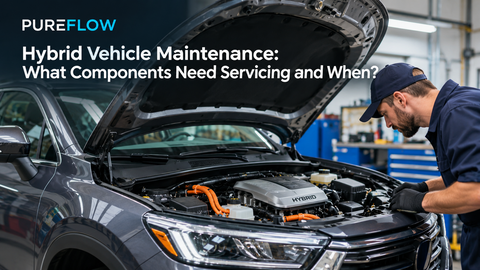
A hybrid needs the same general maintenance as a conventional vehicle, because it still has a gasoline engine. Its electrical system, which includes the battery, motor and associated electronics, typically requires minimal scheduled maintenance. A hybrid’s schedule can also include hybrid-specific items, such as inverter coolant and a hybrid starter-generator belt. Some hybrids also have a battery cooling air intake that needs to be kept clear. The intervals for each item come from the maintenance schedule for your specific vehicle.
Engine and Chassis Maintenance Still Applies
Hybrids and plug-in hybrids have internal combustion engines, so their maintenance requirements are similar to those of conventional vehicles. On the 2024 Kia Niro, for example, engine oil, the engine and cabin air filters, engine coolant, and brake fluid all remain on the schedule.
The schedule may also change with how the vehicle is driven. An owner’s manual may include a separate severe-usage schedule for conditions such as repeated short trips, extensive idling, dusty or unpaved roads, heavy traffic, towing, or frequent stop-and-go driving.
The Hybrid Battery, Motor, and Electronics
The hybrid electrical system typically requires minimal scheduled maintenance. That is not the same as owner maintenance.
Hybrids have high-voltage electrical systems, and manufacturer guidance can limit service of the hybrid system to an authorized dealer. It also warns never to touch orange-colored or high-voltage-labeled components, including wires, cables, and connections.
Hybrid Battery Cooling Air Intake
Some hybrids cool the high-voltage battery through an air intake and duct. On some models, the cooling duct sits under the rear seats. Manufacturer care instructions for the intake include:
-
Clean it:
Clean the cooling duct with a dry cloth on a regular basis
-
Don’t block it:
A blocked duct may let the hybrid battery overheat, and blocking the intake may damage the HEV battery.
-
Keep water out:
Do not allow any water into the air intake, even when cleaning. Water in the intake may cause an electric shock.
Another manufacturer addresses a related condition in a technical service bulletin covering some of its hybrid models. These vehicles may show a MIL ON, or check engine light condition with stored diagnostic trouble codes due to dust or debris buildup in the HV battery cooling fan and/or HV cooling filter.
The bulletin’s repair procedure first determines whether the vehicle has an HV battery intake filter. A technician then inspects and cleans the filter and determines whether it needs replacement. The bulletin addresses vehicles already showing that condition; it does not set a mileage interval.
Inverter Coolant
A hybrid schedule can list engine coolant and inverter coolant as separate items. In the example schedule below, both share the same intervals:
- First replacement at 120,000 miles or 120 months
- Then every 24,000 miles or 24 months
That schedule specifies deionized or soft water only for both coolants.

Hybrid Starter-Generator (HSG) Belt
Some hybrids use a Hybrid Starter & Generator (HSG) belt. In the example schedule, it is inspected every 8,000 miles or 12 months and replaced every 64,000 miles or 48 months under normal use.
Under severe-usage conditions, including extensive idling, dusty or unpaved roads, very cold weather, commercial use, and frequent stop-and-go driving, the replacement interval is every 30,000 miles or 24 months. Manufacturer guidance recommends having the belt inspected or replaced by an authorized dealer.
Brakes and Brake Fluid
Brake systems on hybrids generally last longer than those on conventional vehicles because of regenerative braking. Brake fluid still has its own schedule. The example schedule below calls for inspecting it every 8,000 miles or 12 months and replacing it every 48,000 miles or 48 months.
Cabin Air Filter
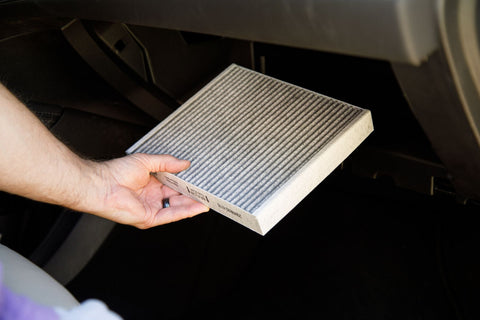
The cabin air filter is not hybrid-specific, but it remains on the schedule, sometimes listed as the climate control air filter.
In the example schedule, it is inspected at 8,000 miles or 12 months and replaced at 16,000 miles or 24 months, and that pattern repeats. Manufacturer guidance also calls for more frequent inspection and earlier replacement when the vehicle is operated for long periods in severely air-polluted cities or on dusty, rough roads. For more on what a neglected filter can lead to, read our guide, A Dirty Car Cabin Air Filter and The Problems It Could Lead To.
Install the replacement filter properly. The manufacturer notes that an improperly installed filter may cause noise and reduce the filter’s effectiveness. To find a replacement for your vehicle, use the PUREFLOW® cabin air filter lookup tool, which searches by year, make, and model.
QUICK TIP
Check whether your driving matches your owner’s manual’s severe-usage conditions. Severe use can shorten replacement intervals for items such as the HSG belt and cabin air filter.
Example Hybrid Maintenance Schedule
The table shows selected items from a current hybrid’s normal maintenance schedule (U.S.). Service is due at whichever interval occurs first. Use your own vehicle’s schedule for its intervals.
| Item | Inspect | Replace |
|---|---|---|
| Engine oil and filter |
Not listed
|
Every 8,000 mi or 12 months
|
| Climate control (cabin) air filter |
8,000 mi or 12 months, then every 16,000 mi or 24 months after
|
16,000 mi or 24 months, then every 16,000 mi or 24 months
|
| Brake fluid |
Every 8,000 mi or 12 months
|
Every 48,000 mi or 48 months
|
| HSG belt |
Every 8,000 mi or 12 months
|
Every 64,000 mi or 48 months
|
| Engine coolant |
Not listed
|
First at 120,000 mi or 120 months, then every 24,000 mi or 24 months
|
| Inverter coolant (HEV) |
Not listed
|
First at 120,000 mi or 120 months, then every 24,000 mi or 24 months
|
In this schedule, “inspect” means: inspect and adjust, correct, clean, or replace if necessary.
Keep Your Hybrid on Its Own Schedule
Use the maintenance schedule for your vehicle’s exact model and model year, and check whether the severe-usage schedule applies to how you drive. When the cabin air filter is due, use the PUREFLOW® vehicle lookup tool to find the recommended cabin air filter for your vehicle, or browse cabin air filters by make.
Frequently Asked Questions
Q1. Do hybrids need less maintenance than gasoline cars?
Not in general terms. The U.S. Department of Energy describes maintenance needs for hybrids and plug-in hybrids as similar to those of conventional vehicles, because they have internal combustion engines. It is all-electric vehicles that it describes as requiring less maintenance.
Q2. Does the hybrid battery need scheduled service?
The battery, motor and associated electronics typically require minimal scheduled maintenance. Some hybrids have a battery cooling air intake to keep clear; manufacturer care instructions include cleaning the duct with a dry cloth and keeping water out of the intake. Some automotive battery systems use liquid coolant and may require regular checks, so refer to your owner’s manual or ask your dealer.
Q3. Can I service hybrid components myself?
Hybrids have high-voltage electrical systems, and manufacturer guidance can limit service of the hybrid system to an authorized dealer and warn never to touch orange-colored or high-voltage-labeled components.
Q4. Do hybrid brakes need less service?
Hybrid brake systems generally last longer than those on conventional vehicles because of regenerative braking. Brake fluid still has a schedule; the example schedule above calls for inspection every 8,000 miles or 12 months and replacement every 48,000 miles or 48 months.
Q5. Does a hybrid still need cabin air filter replacement?
It remains on the schedule. In the example schedule above, the climate control air filter is replaced every 16,000 miles or 24 months, with earlier replacement for long periods of driving in severely air-polluted cities or on dusty, rough roads. Our guide on how often to replace a cabin air filter goes into more detail. Before buying a replacement, you can confirm the correct filter for your vehicle by searching your make and model on the PUREFLOW® vehicle lookup tool.