QUICK ANSWER
Choose an air filter that matches the length, width, and thickness of your existing filter for a proper fit. For enhanced air filtration, consider upgrading to MERV 13 or the highest rating your HVAC system can accommodate. Check your system’s manual or consult an HVAC professional to confirm compatibility. For additional odor control, look for a filter with an activated charcoal layer. When installing, ensure the airflow arrows point toward the furnace or air handler, and replace the filter according to the manufacturer’s recommendations to maintain optimal performance.
Before welcoming holiday guests, take a moment to check your furnace filter. Make sure it’s the correct size, has a MERV rating compatible with your HVAC system, and replace it if needed. Holiday activities like cooking, lighting candles, and using fireplaces, along with pet dander, can introduce additional airborne particles into your home. Since furnace filters only capture particles when your HVAC system is running, starting the season with a fresh, properly fitted filter can help maintain cleaner indoor air throughout the holidays.
-
Match the size, including thickness
The filter should fit snugly within your HVAC system to ensure air passes through the filter rather than around it. You shouldn’t have to bend or force it into place. Furnace filters come in a range of thicknesses, lengths, and widths, so be sure to confirm all three dimensions before ordering. The easiest way to check is to reference the size of your existing filter.
PUREFLOW® Home Air Filters can be filtered by width, length, and thickness, with 1-, 2-, 4-, 5-, and 6-inch options. You can also use the PUREFLOW® filter lookup to find a replacement.
-
Choose a MERV rating your system can accommodate
MERV (Minimum Efficiency Reporting Value) indicates how well a filter traps particles of specific sizes. The higher the rating, the better the filter traps those sizes. For a more detailed breakdown, see MERV ratings explained.
For homeowners looking to upgrade their furnace filter, the EPA recommends choosing a MERV 13 filter or the highest MERV rating your HVAC system can accommodate. According to the EPA's Guide to Air Cleaners in the Home, most residential HVAC systems can accommodate MERV 13 filters without equipment issues when filters are replaced regularly.
Before upgrading, check your HVAC system's manual or consult a qualified technician to confirm compatibility.
-
Match the rating to your household
PUREFLOW® Home Air Filters are available in three MERV ratings. See MERV 8 vs. MERV 11 vs. MERV 13 for a detailed comparison.
- MERV 8: Dependable everyday filtration for dust and pollen.
- MERV 11: Enhanced filtration for homes with pets, seasonal allergies, or higher airborne particle levels.
- MERV 13: The highest level of filtration available from PUREFLOW®.
Holiday plans can add particle sources such as cooking, candles, a fireplace, or a visiting pet. For more on everyday sources, see household activities that lower indoor air quality. Whichever rating you choose, it still needs to be one your system can accommodate.
-
Decide whether odor control matters
A MERV rating measures how effectively a filter captures airborne particles, not odors. If odor control is a priority, look for a filter with an additional odor-reducing layer, such as activated charcoal.
The PUREFLOW® MERV 13 filter combines media that captures particles like dust and pollen, activated charcoal with baking soda to help absorb unwanted odors, and antimicrobial technology that suppresses the growth of mold on the filter. It provides enhanced particle filtration while helping reduce everyday odors from cooking, pets, and smoke.
-
Buy enough to replace on schedule
Replace filters according to the manufacturer's recommendations. Manufacturers typically recommend replacement every 60 to 90 days, and sooner if the filter looks heavily soiled. It is recommended to check the filter every month and change it at least every three months, or whenever it looks dirty.
PUREFLOW® Home Air Filters are sold in 1-, 2-, or 4-packs, depending on the product, so a spare can be on hand when the next change is due.
-
Install it before guests arrive
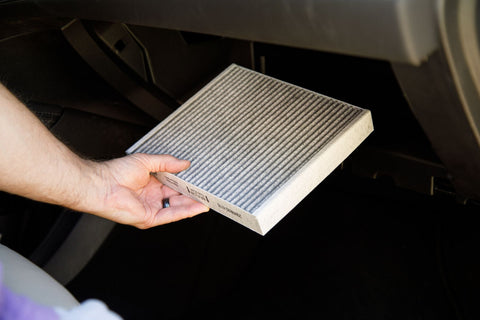
The furnace filter is typically found near the blower compartment, often inside the furnace cabinet or in a slot between the return air duct and the furnace. For access and removal steps, follow your furnace manufacturer's instructions.
When you install the new filter:
- Point the airflow arrows on the side of the filter toward the furnace.
- Make sure it fits snugly without bending.
- Don't run the furnace without a filter in place.
For more on why the filter matters to the system itself, see the role of a home furnace air filter in your HVAC system, and for a broader seasonal checklist, Is Your Home Ready for Winter?
More answers about home filters are in the PUREFLOW® FAQs.

Frequently Asked Questions
Q1. What MERV rating should I buy before hosting?
If you're upgrading, EPA recommends at least MERV 13, or as high a rating as your system fan and filter slot can accommodate. Check your HVAC manual or consult an HVAC technician. To compare PUREFLOW® options, see MERV 8 vs. MERV 11 vs. MERV 13.
Q2. Will a furnace filter help with cooking odors?
It depends on the filter. The PUREFLOW® MERV 13 Home Air Filter includes an activated charcoal layer that helps reduce common indoor odors from cooking, pets, and smoke. Filtration doesn't replace source control and ventilation.
Q3. How often should I replace my furnace filter?
Follow the filter manufacturer's recommendations. Manufacturers typically recommend replacement every 60 to 90 days. It is also recommended to check the filter every month and change it at least every three months, or whenever it looks dirty.
Q4. Which way should the arrows on a furnace filter point?
The arrows indicate airflow. Install the filter with the arrows pointing toward the furnace.
Q5. Does a furnace filter clean the air all the time?
No. Furnace and HVAC filters only clean the air while the system is running.