QUICK ANSWER
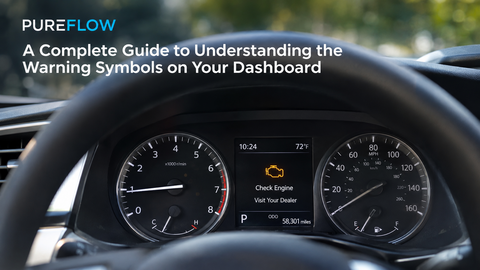
A dashboard warning light indicates a vehicle condition, a malfunction, or a system that has failed to function. Symbols, colors, and the instructed response vary by vehicle, so the owner’s manual for your vehicle is the reference to follow.
Manufacturer guidance describes red icons as indicating a condition that requires immediate attention, and yellow icons as an item of importance that is not necessarily a warning.
On some models, the owner’s manual lists the brake system, charging system, engine oil, and high engine coolant temperature warning lights under “Stop Vehicle in Safe Place Immediately.” It lists the ABS, check engine, and air bag/seat belt pretensioner warning lights under a heading that calls for contacting a dealer and having the vehicle inspected.
When a symbol lights up on the instrument panel, the useful questions are what it indicates and what the manufacturer tells you to do next. The answer depends on the specific light, its color, and, for some lights, whether it is steady or flashing.
What Counts as a Warning Light
U.S. Federal Motor Vehicle Safety Standard No. 101 calls these lights telltales. It defines a telltale as “an optical signal that, when illuminated, indicates the actuation of a device, a correct or improper functioning or condition, or a failure to function.”
For the telltales it lists, the standard specifies the symbol or word that identifies each one and the color its light must be. Manufacturers may add supplementary symbols or words, and lights for systems the standard does not list are not covered by those identification requirements.
What the Colors Indicate
Automaker guidance describes color coding this way: “Red icons indicate a condition that requires immediate attention, such as an open door or low engine oil pressure.” “Yellow icons indicate an item of importance (such as low fuel) but are not necessarily a warning.”
It also notes that dashboard icons appear in different colors depending on the system and its status in a specific vehicle. Use your owner’s manual to confirm what a given color means in your vehicle.
Lights That Come On at Startup
FMVSS No. 101 allows a telltale to light during a bulb check, in addition to when it is indicating its condition.
A light that should appear at startup but does not can itself indicate a problem. On some models, the owner’s manual lists an air bag/seat belt pretensioner warning light that does not illuminate when the ignition is switched ON as a malfunction. Other manufacturer guidance says that if safety system lights such as the ABS and SRS airbag warning lights do not come on when you start the hybrid system, those systems may not be available to help protect you in an accident, and to have the vehicle inspected by a dealer immediately.

Example: Lights That Require Stopping
In the example owner’s manual, the following lights are grouped under “Stop Vehicle in Safe Place Immediately.”
| Warning light | What the manual says it indicates | What the manual says to do |
|---|---|---|
| Brake system warning light |
Stays on after the parking brake is released: may indicate low brake fluid or a brake system problem
|
Park in a safe place immediately and contact an authorized dealer. Do not drive with the light illuminated
|
| Brake system and ABS warning lights on together |
Usually, an electronic brake force distribution problem
|
Do not drive. Have the vehicle towed to an authorized dealer.
|
| Charging system warning light |
Alternator or charging system malfunction
|
Drive to the side of the road, park off the right-of-way, and consult an authorized dealer. The engine could stop unexpectedly
|
| Engine oil warning light |
Engine oil pressure has dropped
|
Do not drive. If it comes on while driving, stop in a safe place, turn off the engine, and contact an authorized dealer
|
| High engine coolant temperature warning light (red), flashing |
Coolant temperature is extremely high
|
Drive slowly to reduce engine load until you find a safe place to stop, then wait for the engine to cool
|
| High engine coolant temperature warning light (red), illuminated |
Possible overheating
|
Park immediately in a safe place and turn off the engine
|
The manual also warns that with the brake system warning light on, braking effectiveness may decrease and the brakes may not work or could fail.
Example: Lights That Call for a Dealer Inspection
The same manual groups these lights under a heading that calls for contacting an authorized dealer and having the vehicle inspected.
| Warning light | What the manual says it indicates | What the manual says to do |
|---|---|---|
| ABS warning light (stays on while driving) |
ABS malfunction detected; brakes work as they would without ABS
|
Consult an authorized dealer as soon as possible.
|
| Check engine light (stays on or flashes continuously) |
A possible problem; causes include electrical or emissions problems, very low fuel, or a loose fuel-filler cap
|
Do not drive at high speeds. Consult an authorized dealer as soon as possible. Do not disconnect the battery cables.
|
| Air bag/seat belt pretensioner warning light (red) |
A malfunction if it flashes constantly, stays illuminated, or does not light when the ignition is switched ON
|
Consult an authorized dealer as soon as possible; the system may not work in a crash
|
| TCS/DSC indicator light (stays on) |
TCS, DSC, or brake assist may not work correctly
|
Do not drive. If it comes on while driving, stop in a safe place, turn off the engine, and contact an authorized dealer
|
| TPMS warning light (flashing) |
TPMS malfunction
|
Have it checked by an authorized dealer as soon as possible.
|
For the TPMS warning light, the manual also says that if the light comes on or flashes, or the tire pressure beep sound is heard, to “decrease vehicle speed immediately and avoid sudden maneuvering and braking,” check for a slow leak or flat tire, and get to a safe place.
Lights You Can Resolve Yourself
Some lights point to a condition you can correct. In the same owner’s manual, the low fuel warning light calls for adding fuel, and the door-ajar warning light calls for closing the door or liftgate securely. The manual’s instruction is to take the appropriate action and verify that the warning light turns off.
Finding the Meaning for Your Vehicle
The examples above come from manufacturer documentation for specific models, and the instructions for your vehicle can differ. Automaker owner resources point to the owner’s manual or a dealer for vehicle-specific details. When a light you don’t recognize comes on, look it up in the warning-light section of your vehicle’s manual and follow the action it gives for that light, color, and state.
If you are scheduling other maintenance, use the PUREFLOW® vehicle lookup tool to find the recommended cabin air filter for your vehicle. For more on why filter replacement matters, read our guide, Why Changing Your Cabin Air Filter Matters More Than You Think.
Frequently Asked Questions
Q1. What is the difference between a red and a yellow warning light?
Manufacturer guidance describes red icons as indicating a condition that requires immediate attention, and yellow icons as an item of importance that is not necessarily a warning. Color use depends on the vehicle and system, so confirm the meaning in your owner’s manual.
Q2. Why do warning lights come on when I start the car?
FMVSS No. 101 allows telltales to emit light during a bulb check. On some models, the owner’s manual treats an air bag warning light that does not emit light at ignition ON as a malfunction.
Q3. Can I keep driving with the check engine light on?
Manufacturer guidance for some models says that if the check engine light stays on or flashes continuously, do not drive at high speeds and consult an authorized dealer as soon as possible. Other vehicles may give different instructions.
Q4. What does a flashing engine coolant temperature light mean?
In the example owner’s manual, a flashing high engine coolant temperature warning light means the coolant temperature is extremely high. The manual says to drive slowly to reduce engine load until you can stop safely, then let the engine cool.
Q5. How do I find the right cabin air filter for my vehicle?
You can confirm the correct filter for your vehicle by searching your make and model on the PUREFLOW® vehicle lookup tool. Our guide on where the cabin air filter is located in your car goes into more detail.