QUICK ANSWER
For interior windshield fog, use the defroster with fresh air and, where supported by the vehicle's climate-control system, A/C dehumidification. If airflow is noticeably weak, check the cabin air filter as one possible cause.
Foggy windows can reduce visibility while driving. If moisture is collecting on the inside of your windshield, the defroster can help clear it by directing air toward the glass.
One mistake to avoid is leaving the climate control system in recirculation mode while trying to clear interior fog. Recirculation keeps cabin air circulating rather than bringing in outside air, which can allow window fogging to continue under certain conditions.
For interior fog, use the windshield defroster with warm air and an appropriate fan speed. Select fresh air rather than recirculation, and use the A/C dehumidifying function where recommended by your vehicle's owner's manual.
For moisture on the inside of the windshield, use the following approach. Climate control settings and automatic defrost functions vary by vehicle, so follow the instructions for your specific model.
-
Turn on the windshield defroster
Select the windshield defrost or defog mode to direct airflow toward the windshield.
Some vehicles automatically adjust several climate control settings when this mode is activated. For example, the 2026 Mazda CX-50 automatically selects fresh air and turns on the air conditioner when the windshield defroster is operating.
-
Set the temperature to warm
Warm airflow is recommended for windshield defogging in Mazda's documented climate control procedures. Increasing the airflow temperature can also help clear the glass more quickly in the vehicles covered by those instructions.
Avoid setting the defroster to cold air without checking your owner's manual. Mazda warns that using cold air in windshield defrost mode can cause moisture or frost to form on the outside of the glass, reducing visibility.
-
Increase the fan speed
Adjust the fan speed to direct additional airflow toward the windshield.
If your vehicle has a maximum defrost setting, it may automatically increase the fan speed. The 2024 Ford F-150, for example, directs air through the windshield vents and sets the blower to its highest speed when maximum defrost is selected.
-
Select fresh air instead of recirculation
When the climate control system allows manual air-intake selection during defogging, use the fresh-air setting recommended by your vehicle's manufacturer.
Recirculation closes off the outside air supply and circulates air within the cabin. In cold or rainy conditions, this setting can contribute to window fogging.
Some vehicles automatically disable recirculation when maximum defrost is selected. If the system controls this setting automatically, follow the vehicle's defrost instructions rather than trying to override them.
-
Use the A/C dehumidifying function when appropriate
Air conditioning does more than cool the cabin. It can also dehumidify the air.
When the vehicle's climate control system supports this function, A/C can be used with warm airflow to help clear interior fog. The temperature does not have to be set to cold to use the dehumidifying function.
Check the owner's manual before changing the A/C setting. Some vehicles automatically activate air conditioning during defrost operation, while others provide separate controls. The air conditioning compressor may also operate differently under certain temperature and defrost conditions.
Why Does Recirculation Affect Window Fogging?
Interior fog develops when moisture in the cabin air condenses on the glass.
In cold weather, the windshield can become cooler than the air inside the vehicle. Moisture from occupants and damp belongings can then collect on its interior surface.
Recirculation keeps cabin air circulating rather than bringing in outside air. If moisture remains in the cabin, the windows may continue to fog.
Fresh-air mode allows outside air to enter the cabin, while the A/C dehumidifying function can help remove moisture from the air delivered by the climate control system.
These functions work alongside the windshield defroster to address interior fogging.
What If the Fog Is on the Outside of the Windshield?
The appropriate response depends on which side of the glass is fogged.
In warm, humid weather, condensation can form on the outside of a windshield that has been cooled by the vehicle's air conditioning.
Use the windshield wipers to clear exterior moisture. If condensation continues to form while the A/C is operating, adjusting the cabin temperature upward may help.
Do not assume that increasing the windshield defroster's cooling setting will clear exterior fog. The appropriate temperature setting depends on the vehicle and conditions.
What to Check if Your Windows Keep Fogging Up
If the windows continue to fog after the climate control system has been set according to the owner's manual, check the following conditions.
-
Moisture inside the vehicle
Damp carpets and wet belongings can introduce moisture into the cabin.
Remove wet items when practical and dry damp carpeting. Reducing moisture inside the vehicle can help address recurring interior condensation.
-
Restricted climate control airflow
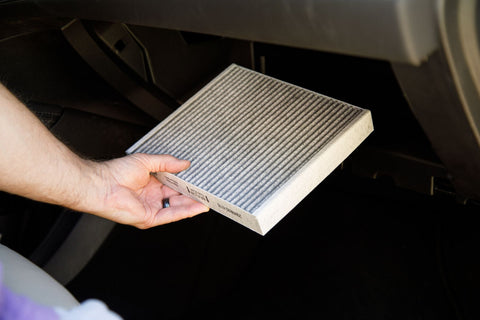
If airflow from the vents has significantly decreased, the cabin air filter may be worth checking.
For example, Mazda's 2023 MX-30 owner's manual identifies a clogged climate control air filter as a possible cause of significantly reduced airflow and instructs owners to replace the filter under that condition.
A restricted filter is not, by itself, a diagnosis of the cause of window fogging. Follow the maintenance and inspection instructions for the applicable vehicle.
-
Climate control performance
If the windshield remains fogged despite using the recommended settings, consult the vehicle's owner's manual for additional operating instructions.
If the system cannot provide the airflow or defogging performance described in the manual, have the climate control system inspected by a qualified service professional.
Do not continue driving with an obstructed view. If visibility becomes inadequate, stop in a safe location and wait until the glass is clear before continuing.
If reduced airflow is part of the problem, check the cabin air filter using your vehicle's maintenance guidance. Use the PUREFLOW® vehicle lookup tool to find the recommended cabin air filter for your vehicle.
Frequently Asked Questions
Q1. Should I use hot or cold air to defog my windshield?
For interior windshield fogging, warm air is recommended in Mazda's documented defogging procedures. The appropriate setting depends on the vehicle and conditions. Follow the temperature instructions in your owner's manual rather than assuming that cold air is suitable for every situation.
Q2. Should recirculation be on or off when defogging windows?
For interior fogging, use fresh-air mode when recommended by the vehicle manufacturer. Some climate control systems automatically disable recirculation during windshield defrosting.
Q3. Does turning on the A/C help clear foggy windows?
Yes. Air conditioning can dehumidify the air and help clear moisture from the inside of the windshield. It can be used with warm airflow where the vehicle's climate control system supports that operation.
Q4. Can a dirty cabin air filter cause windows to fog up?
A clogged cabin air filter can restrict climate control airflow in applicable vehicles. Reduced airflow may affect the air available for windshield defogging, but fogging alone does not establish that the filter is clogged. Check the vehicle's maintenance instructions if airflow has decreased. For more on how a clogged filter affects AC performance, read The Hidden Impact of Dirty Cabin Filters on A/C Performance and Fuel Efficiency.
Q5. What should I do if my windshield fogs up while driving?
Use the vehicle's windshield defogging controls according to the owner's manual. If the fog prevents a clear view of the road, stop in a safe location and wait until visibility is restored before continuing.