What Is a Cabin Air Filter?
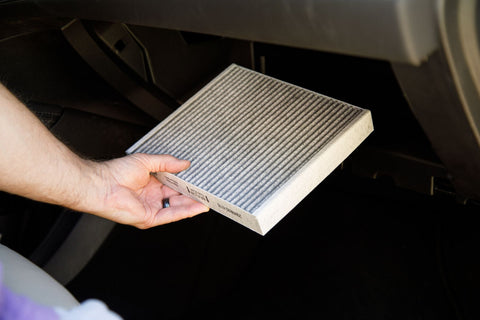
A cabin air filter, in simple terms, is your car's lung. It's the unsung hero that ensures the air you breathe inside your vehicle is fresh and clean, much like the air conditioning or furnace filters in your home. Astonishingly, despite over 220 million vehicles in the US being equipped with cabin air filters (that's a whopping 76% of all registered vehicles), many are still oblivious to their existence and crucial function.
However, there's a bit of confusion in the automotive world about what to call these life-enhancing filters. Car manufacturers seem to have a naming identity crisis when referring to the same type of filter. BMW labels it as a "microfilter" or an "activated charcoal filter." Honda and Acura prefer the term "dust and pollen filter." Toyota and Lexus simply call it an "air conditioning filter," while Jeep, Ram, Chrysler, Dodge, Ford, and Lincoln stick with "cabin air filter." GM (Cadillac, Chevrolet, Buick) opts for "passenger compartment air filter," and Hyundai and Kia casually switch between "cabin air filter" and "climate control air filter." Volvo, on the other hand, goes with "passenger compartment air filter." Some even refer to it as an HVAC filter, ventilation filter, or AC filter.
The Evolution of Cabin Air Filters
When Were Cabin Air Filters First Introduced?
The history of cabin air filters dates back to the 1970s when they made their debut on a Rambler vehicle. However, Rambler was a limited presence in international markets, and the real pioneer in making cabin air filters standard in all its models was Saab, starting in 1979 with the 900 model. BMW, Mazda, and Ford Europe followed suit in the late 1980s, while Volvo joined the cabin air filtration club in 1993. In the US, the 1995 Ford Contour and Mercury Mystique compacts were the first domestic nameplates to feature cabin air filters.
How Does a Cabin Air Filter Work?
Often, consumers mistake the engine air filter for the cabin air filter. Let's clear the air (pun intended): the engine air filter's job is to safeguard your engine, ensuring optimal performance and fuel economy by cleaning the air before it enters the combustion chamber. It primarily tackles dust particles larger than 3 microns.
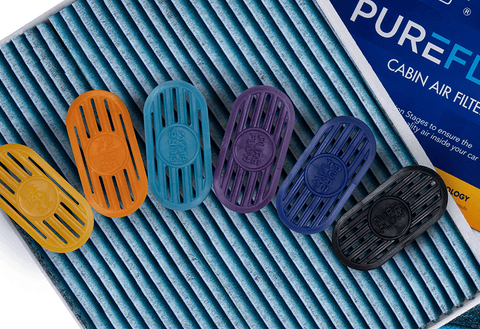
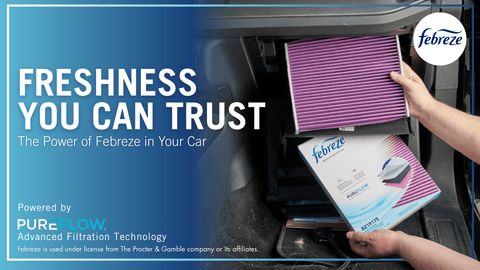
On the other hand, the cabin air filter plays a vital role in safeguarding you and your passengers by removing fine dust particles as tiny as 0.3 microns. Some advanced cabin filters go a step further by incorporating activated charcoal layers to eliminate harmful gases like carbon monoxide and sulfur dioxide. Cutting-edge technologies like PureFlow take filtration to the next level by adding layers of baking soda, high-tech nano silver, and nano copper particles. These filters not only neutralize viruses, germs, and bacteria but also vanquish unwanted odors.
Choosing the Perfect Cabin Filter
What is the Best Cabin Filter For My Car?
Finding the right filter for your car is a breeze. Simply search for the year, make, and model of your vehicle, and you're on your way to clean air nirvana. While the choices may seem overwhelming, remember this: not all filters are created equal. Premium filters like PureFlow offer superior efficiency in trapping both fine and coarse dust (10 microns or larger). Economy filters, on the other hand, mainly target large particles. It's crucial to consider the filter's performance.
In the automotive industry, the common scale for evaluating cabin filters is based on the ISO-55111 testing protocol. High-quality cabin filters are expected to eliminate over 90% of fine dust and over 99% of coarse dust.
When Should You Replace Your Cabin Filter?
Just like the air filter in your home, cabin air filters in cars need periodic replacement. Several factors can affect their performance, including dust, road grime, leaves, and other debris that can clog the filter, impeding airflow. Humidity and moisture can also impact the filter's effectiveness.
If you notice a decrease in the airflow inside your car or detect a musty smell, it's a clear sign that it's time to replace your cabin filter. Some prefer to swap it out after the pollen season, ensuring a flow of cool air in the hot summer months. Others opt for a replacement after the fall to prepare for winter, once the dry leaves and debris have cleared. You can even replace it before allergy season kicks in. It's not just a mechanical decision; it's about ensuring the air you breathe inside your car is always fresh and healthy.
Conclusion
Your cabin air filter is an unsung hero that deserves recognition for the crucial role it plays in keeping you and your passengers’ breathing clean, fresh air while on the road. Choosing the right filter and maintaining it regularly will ensure that you continue to enjoy a comfortable and healthy driving experience. So, don't forget to give your cabin air filter the attention it deserves, and breathe easy on your journeys.
Continue reading our other articles to find the right filter for your cabin interior so that your air is always fresh.